
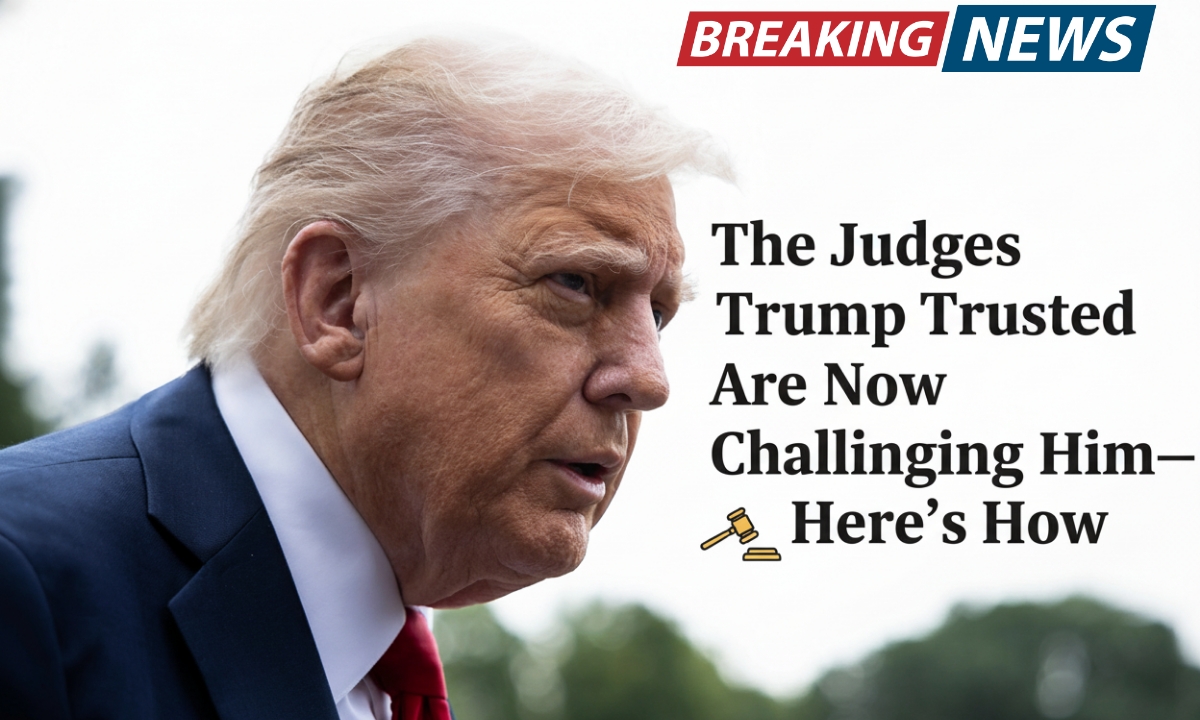
The Judges Trump Trusted: In a world of politics where loyalty is prized above all else, there’s nothing quite as jarring as the sight of your own choices turning their backs on you. This has become the reality for former President Donald Trump as a series of legal setbacks have come not from his political rivals but from the very judges he appointed. In recent months, Trump has experienced a series of courtroom defeats, many of which have come at the hands of district court judges he personally nominated during his time in office. These judges, once seen as key players in advancing Trump’s political agenda, are now standing in the way of his policies, offering up stern rejections that have led Trump to lash out publicly.
National Guard Call-Up: A Stark Rejection
Trump’s frustration reached new heights when a Donald Trump-appointed judge in Oregon, U.S. District Judge Karin Immergut, rejected his request to send National Guard troops into Portland. The ruling didn’t just dismiss Trump’s request; it painted it as a dangerous overreach that risked turning the U.S. into a military-dominated state. Trump’s response was blunt: he vented on social media, expressing regret over the people he trusted to pick these judges, suggesting that they hadn’t done him any favors.
Supreme Court Success vs. District Court Setbacks
Despite the tense relationship with his district court appointees, there has been a different story among his Supreme Court picks. Justices Neil Gorsuch, Brett Kavanaugh, and Amy Coney Barrett, whom Trump carefully chose for the high court, have generally ruled in his favor on several key matters. Their rulings have provided the president with some legal victories, particularly on emergency orders that temporarily halt lower court decisions against his policies. The White House has recently pointed to them as evidence of his judicial success.
Deportation Battles and Immigration Setbacks
In case after case, judges appointed by Trump have delivered stinging rejections of his policies, with some even criticizing him for attempting to undermine the judiciary itself. For instance, U.S. District Judge Tim Kelly blocked the administration’s controversial deportation of unaccompanied Guatemalan children, finding that the administration’s explanation was flimsy and legally insufficient. Similarly, several judges ruled against Trump’s use of the Alien Enemies Act to fast-track deportations, defending immigrants’ due process rights.
Media Access and Presidential Overreach
In another high-profile case, U.S. District Judge Trevor McFadden ruled that the White House had illegally evicted the Associated Press from Oval Office events due to a disagreement over terminology. Trump mischaracterized this ruling publicly, highlighting the disconnect between his expectations and the actual judicial outcomes. Other judges, including Timothy Reif, also ruled against Trump’s unilateral actions, such as imposing sweeping tariffs on trading partners, reminding the president of the constitutional limits of executive power.
Judges Speak Out Against Executive Attacks
Several Trump-appointed judges have not only rejected policies but also criticized the president’s attacks on the judiciary. U.S. District Judge Thomas Cullen described Trump’s efforts to smear judges who rule against him as “unprecedented and unfortunate,” warning against the erosion of constitutional checks and balances. These rulings show that even loyal appointees are willing to defend the integrity of the legal system over political allegiance.
A Complicated Judicial Legacy
While Trump’s Supreme Court picks continue to deliver victories, the judges he appointed to lower courts are increasingly proving to be a thorn in his side. Many of these rulings go beyond legal technicalities—they question executive overreach, defend democratic principles, and uphold fairness in highly politicized cases. Trump’s judicial legacy, therefore, is far more complex than he may have anticipated, revealing a tension between intended loyalty and judicial independence.
Disclaimer: The views expressed in this article are intended to provide an analysis based on public records and events. They do not reflect the views or opinions of any individual, entity, or political group. All information is factual and taken from available sources, and any personal opinions are only meant to give context to the current legal landscape.